
Article: ABAD’s new Supply Chain Efficiency Committee
NEWS
Integration in ABAD’s new Supply Chain Efficiency Committee
ABAD Supply Chain Committee launches strategic agenda to drive efficiency
26 March 2026 — Marcela
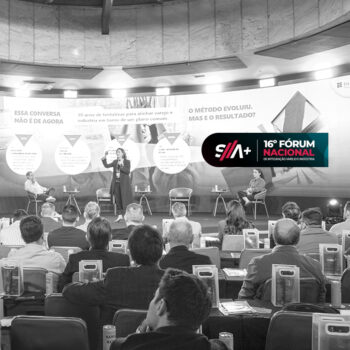
The first meeting of ABAD’s Supply Chain Efficiency Committee marked the beginning of a strategic agenda aimed at improving logistics operations across the wholesale distribution sector. Held in São Paulo, the event brought together executives from partner industries and wholesale distribution companies to explore pathways that integrate technology, innovation and collaboration across the supply chain.
For ABAD CEO Oscar Attisano, who led the event on behalf of Association President Leonardo Miguel Severini, the initiative represents a meaningful step toward building shared solutions. “The goal is to establish a solid foundation for addressing the challenges in this space – defining strategies, adopting performance indicators and enabling meaningful exchange between participants,” he said.
Integration as a central theme
One of the meeting’s main points of consensus was the need for greater integration between industry, distributors and retail. According to Alessandra Reganati of Integration Consulting, who co-coordinates the committee, the current environment demands a more collaborative approach among market players.
“There is growing pressure for industry, distribution and retail must work together to mutually leverage each other, not operate in isolation,” she said.
The topic also emerged through the lens of data integration. For Renan de Almeida Hervelha, General Director of Cremer, there are still structural challenges to address before more advanced technologies can be adopted. “Before accelerating with artificial intelligence, we need to resolve the basics: the exchange of data and information across the chain,” he noted.
Beyond cross-company integration, participants highlighted the importance of internal alignment within organizations. “Functions need to be at the same table. When we look at the company in an integrated way, we often find solutions that were already there,” said Hugo Piancó, Director of the Sergipe Business Unit, reflecting on one of the company’s success stories.
Efficiency levers
The meeting identified four main efficiency levers across the supply chain: planning, distribution center (DC) operations, order fulfilment and delivery.
In planning, the focus is on improving demand forecasting and enabling more informed decisions around inventory and production, with increasing use of algorithms and artificial intelligence.
In DC operations, discussions centered on automation, productivity gains and the reduction of errors and costs. Technologies such as WMS systems, automated picking and digital twins were cited as trends already gaining traction.
In order fulfilment, the challenge lies in making the order cycle faster and more efficient, with less manual intervention. The concept of touchless orders – processed without human intervention – was highlighted as a relevant direction.
In delivery, dynamic routing solutions, real-time tracking and the use of control towers emerged as key priorities for improving predictability and reducing logistics costs.
The discussions also reflected the sector’s current pressures: cost reduction, the need for productivity gains and ongoing workforce challenges.
“Supply chain today is under pressure from logistics costs that can represent 6% to 8% of net revenue, alongside the need to raise service levels with greater reach and agility,” explained Alessandra Reganati.
Workforce shortages and changing labor dynamics were also flagged as factors accelerating the adoption of automation and technology across operations.
Joint construction and next steps
The committee will continue with further meetings over the coming months, with the aim of deepening discussions, consolidating best practices and structuring content to be presented at the 45th ABAD National Annual Convention (ABAD 2026 Atibaia) scheduled for June 8 and 9.
According to Roger Saltiel, also a committee co-coordinator, the goal is to turn discussions into practical deliverables for the sector. “We want to capture real experiences and case studies that can be shared, contributing directly to the evolution of operations,” he said.
The initiative reinforces ABAD’s role as a facilitator of strategic solutions for the development of the indirect channel, promoting integration, efficiency, and innovation across the supply chain.
- On 10 April 2026